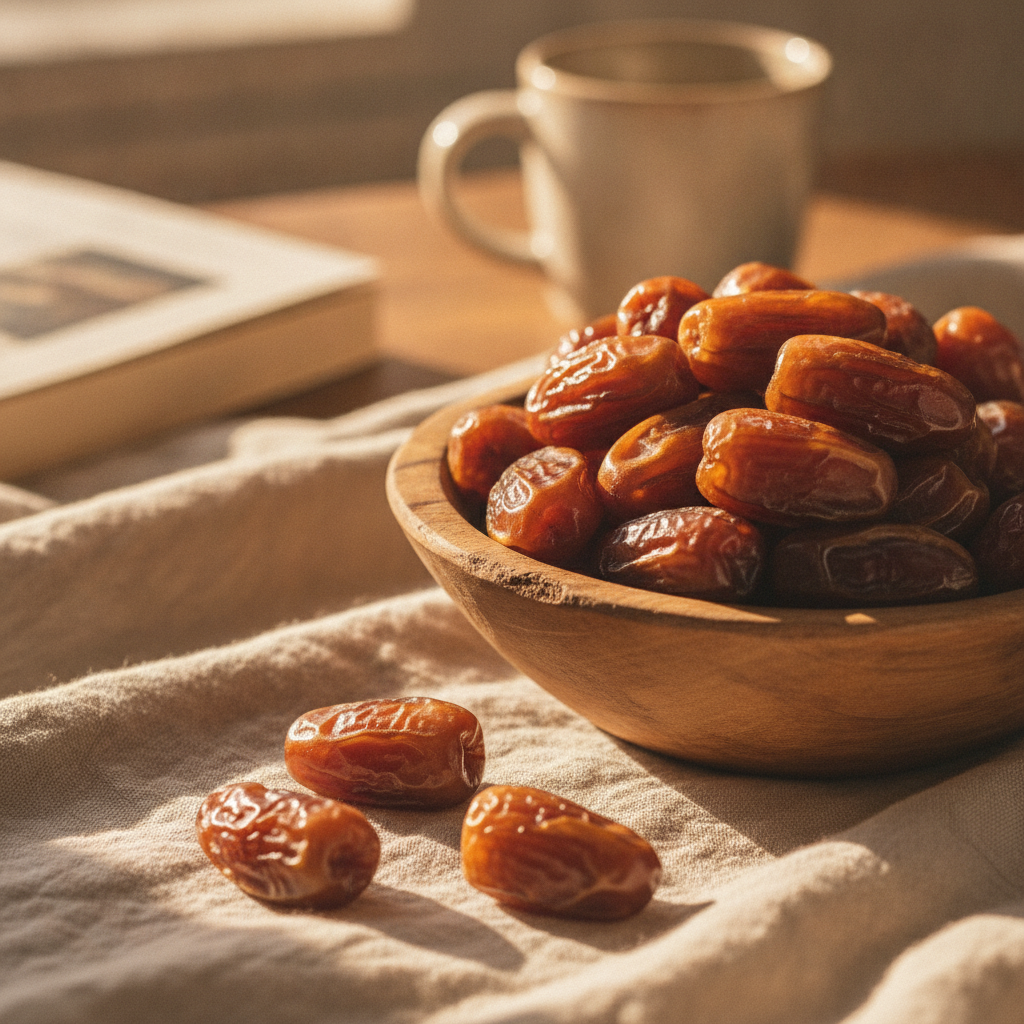
Here is the thing everyone gets wrong about dates. You bite into one, it tastes like caramel that grew on a tree, and your brain files it under “candy, careful.” So you put the bag back.
I want to talk you out of that, honestly, with the actual research, not a health-blog fairy tale.
Yes, dates are sweet. No, that does not make them sugar.
A date is a whole fruit. Sugar in a bag is stripped of everything except the sweet. That difference is not a technicality, it is the whole story, because what comes packaged with the sweetness is what decides how your body handles it.
When you eat table sugar on its own, it climbs your blood sugar fast, your body answers hard, and you get the spike and the crash you already know from your afternoons. I wrote about that ride in my piece on sugar sources, and again in why you crash after lunch. A date does not ride the same way.
What the research actually found
This is where it stops being an opinion. Researchers tested five different varieties of dates on both healthy people and people with type 2 diabetes and measured the glycemic index of each, that is, how fast and how high each one pushes blood sugar.
All five varieties came out low glycemic index, roughly 46 to 56, and there was no meaningful difference between the healthy group and the diabetic group (Alkaabi 2011).
Low GI means the sweetness arrives as a slope, not a cliff. For a fruit that tastes this much like dessert, that is genuinely surprising, and it is the reason dates behave nothing like the candy your instinct lumps them in with.
Why does a sweet fruit stay low on the scale? Because the sugar does not travel alone. It comes wrapped in fiber, and fiber slows the whole thing down. That is the part the bag of sugar threw away.
The honest catch, because I am not going to sell you a free pass
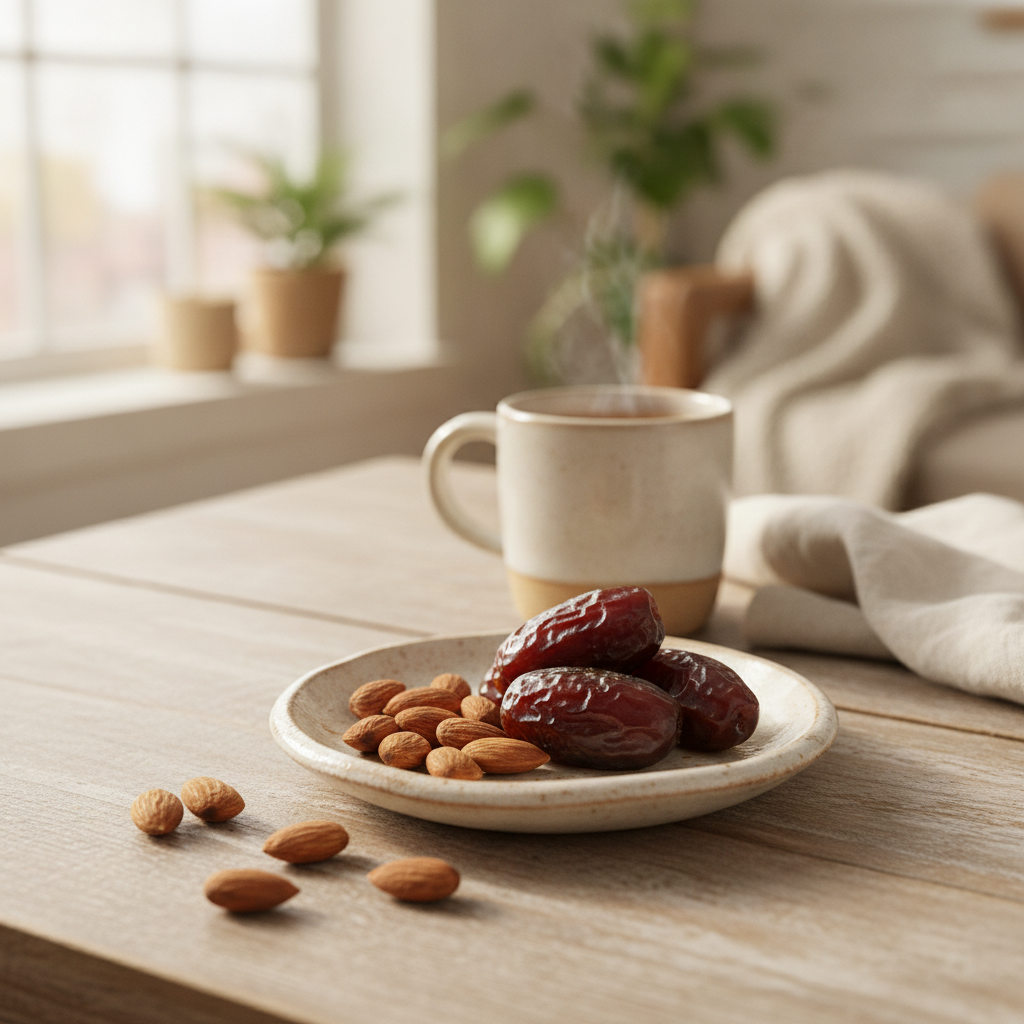
Low glycemic index is not a license to eat the whole box. It tells you dates are a steadier sweet, not a free-for-all. They’re still real food, calories the way Mother Nature made them, and a little balance keeps them working for you.
So here is how I actually use them. I keep it to about five or six at a time, max, and I lean on them where they earn their place: as the sweetener that lets me skip the processed stuff. A couple of dates in a smoothie instead of a scoop of white sugar or a squirt of the processed stuff. A date with a few nuts when the afternoon wants something sweet, so I get the sweetness and some fat and fiber in the same bite instead of a naked spike.
That’s the move. Use dates to fill in the gaps when you feel like snacking.
Where they fit in a real day
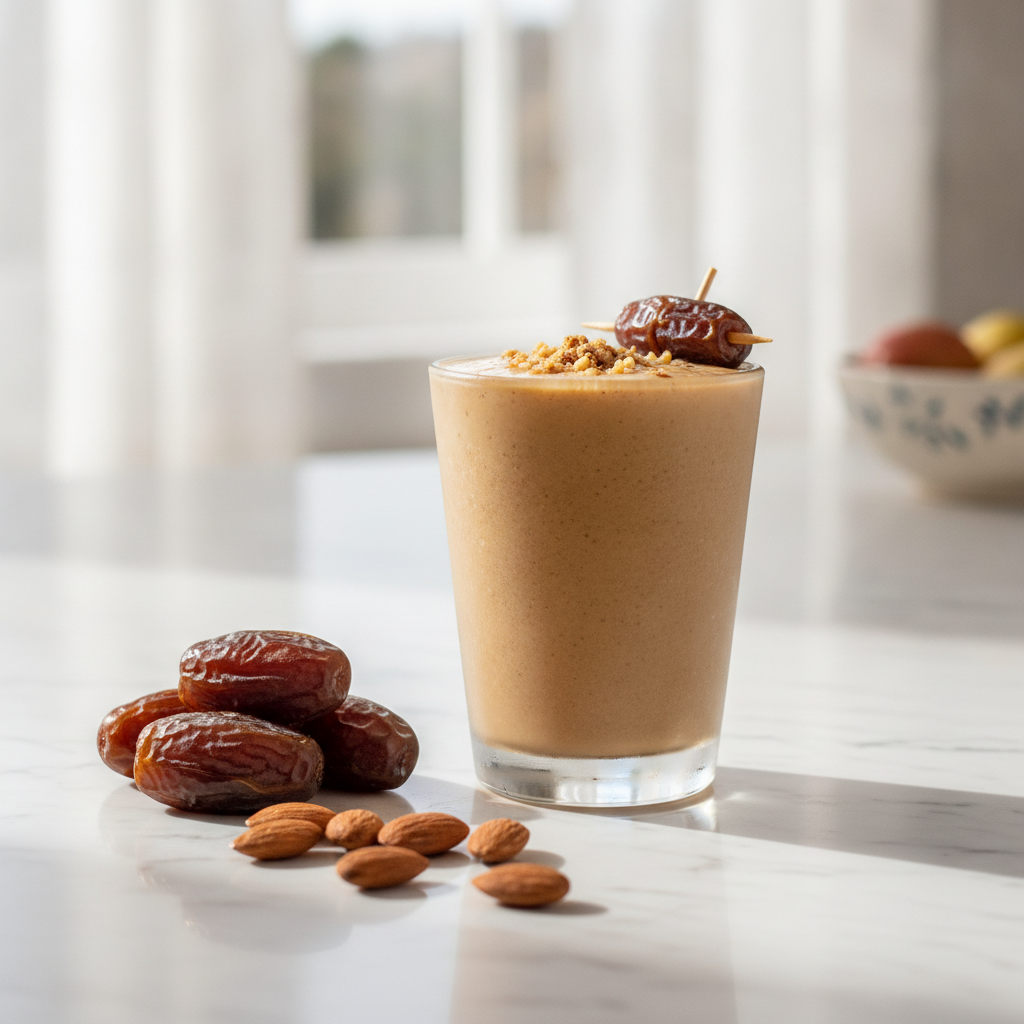
If your afternoon keeps ending in a sugar hunt, the fix is rarely more willpower. It is usually giving the craving a better thing to land on. Dates are one of those better things, because they answer the sweet tooth without the spike.
It is also exactly why they are the sweetener in my go-to smoothie: the whole point is a treat that steadies you instead of spiking you, and a date does that job while tasting like you are getting away with something.
So, are dates just sugar?
No. They taste like a treat and they test like a slow one. The sweetness is real, the fiber that comes with it is what changes the game, and the research backs it: low glycemic index across every variety they tried, in healthy people and diabetic people alike.
Enjoy them like the caramelly bliss they are: A few at a time, in place of the processed sweet, and let them do the one thing sugar in a bag never will: satisfy you without the fall.
Get my first 3 smoothie mornings, free
Three dessert-style smoothies that work with your body after 50. Under seven minutes each. Tell me where to send them.
Free. Unsubscribe anytime, no spam.